
The Report Card That Won Every Exam - But Lost Every Interview
Riya graduated with an 8.7 CGPA from a reputed engineering college in Pune. She had never failed a subject, scored in the top 10 percent of her batch, and spent four years doing exactly what she was told - study hard, score well, get placed.
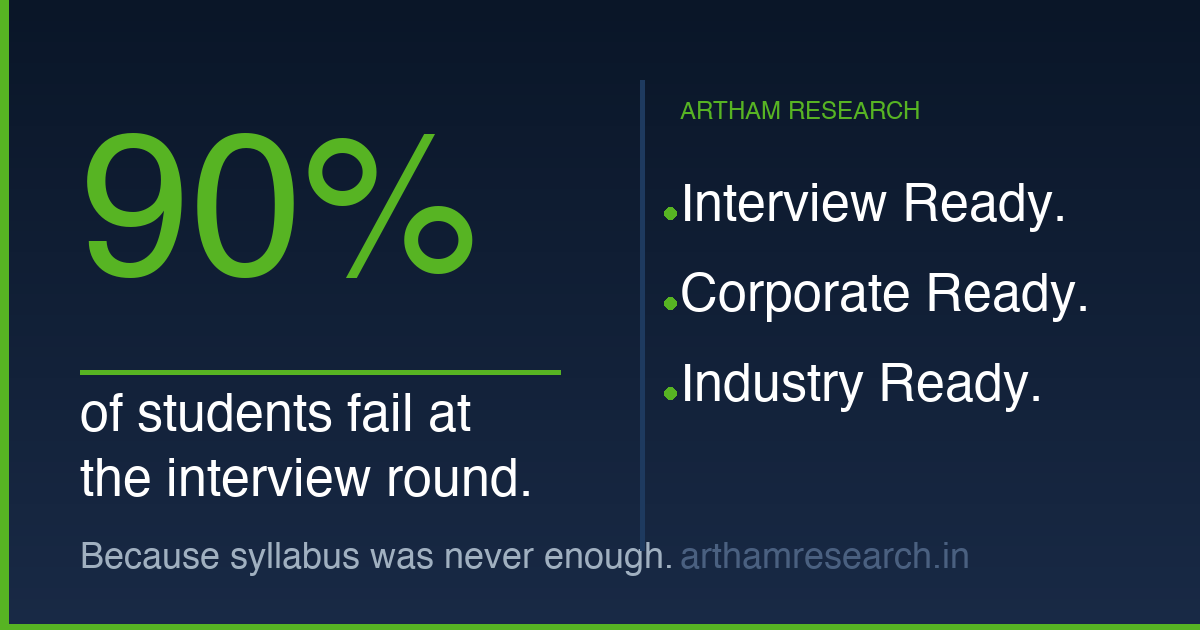
She applied to 40 companies during campus placements. She cleared exactly two first rounds.
This is not an unusual story. Walk into any college placement cell in India and you will find dozens of Riyas - students who did everything right academically and still struggle when it actually matters. The question worth asking is not what went wrong. The question is: why are we still surprised when this happens?
What the Numbers Actually Say
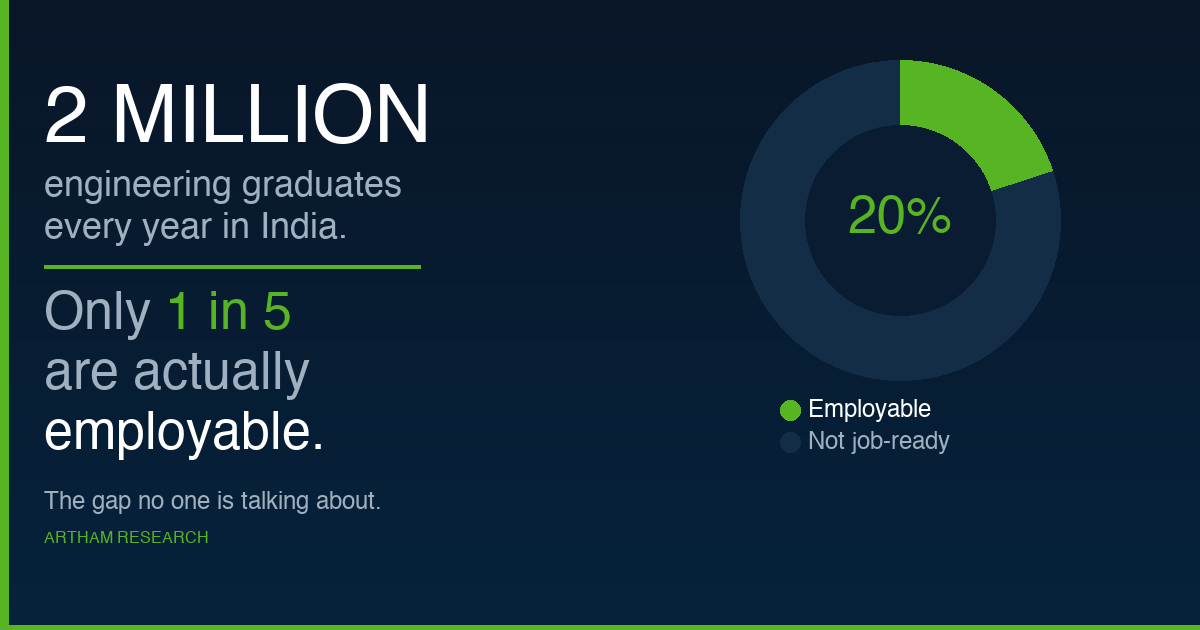
India produces roughly 1.5 million engineering graduates and over 300,000 MBA graduates every year. According to multiple industry assessments, fewer than 20 percent of engineering graduates and around 30 percent of MBA graduates are considered employable by industry standards - meaning they can actually do the job from day one without extensive hand-holding.
The remaining 70 to 80 percent are technically qualified on paper. Their transcripts look fine. Their colleges are accredited. And yet, when they sit across a hiring manager, something fundamental is missing.
That something is not intelligence. It is not even effort. It is a specific set of competencies that Indian universities were simply never designed to build.
What Employers Are Actually Looking For in 2026
The hiring landscape has shifted considerably. In 2026, most competitive employers - whether it is a Big Four consulting firm, a mid-size fintech, or a growing startup - are evaluating candidates on roughly four dimensions:
Structured thinking and communication. Can you explain a complex problem clearly? Can you structure your answer without rambling? Can you write a coherent email? These sound basic, but they are where most fresh graduates stumble. Four years of answering 5-mark questions in point form does not build this.
Contextual application of knowledge. Knowing the definition of EBITDA is not the same as knowing what a declining EBITDA margin means for a company you are being asked to analyse. Employers want to see if you can take what you learned in a classroom and use it on a real problem - with incomplete information, under time pressure.
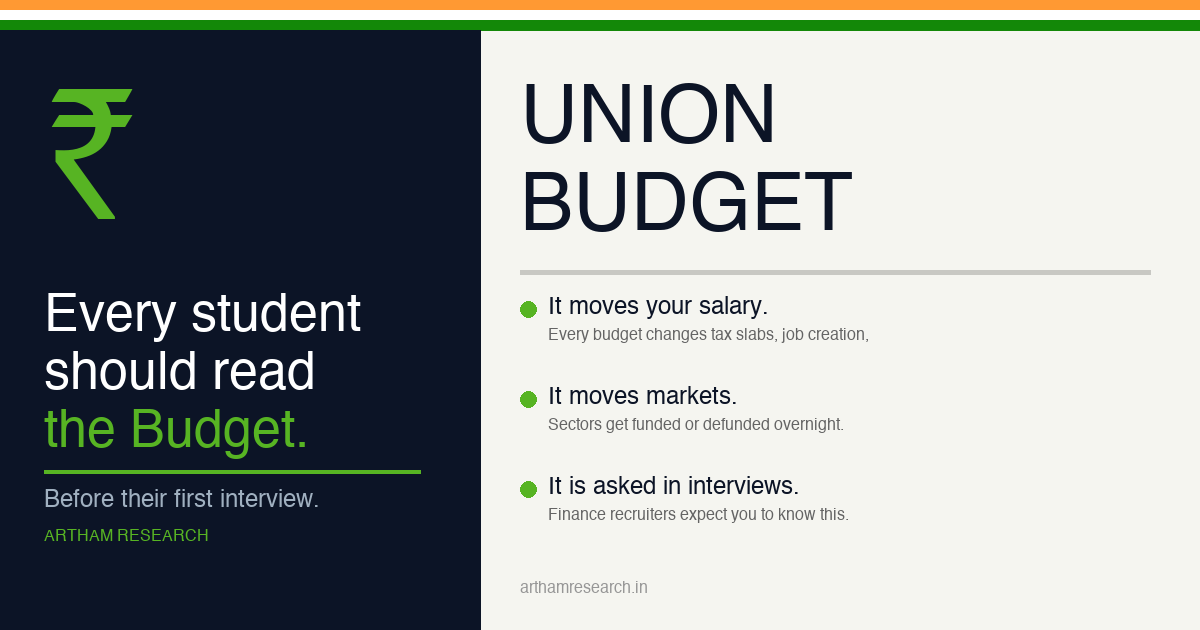
Commercial awareness. Do you follow what is happening in the industry you want to work in? Can you connect a recent news event to a business implication? A 9 CGPA student who cannot name a recent RBI policy change is a harder sell to a banking client than a 7 CGPA student who reads the Economic Times daily and has an opinion on it.
Ownership and initiative. Have you done anything beyond the curriculum? A project, a side initiative, an internship where you actually solved something - not just observed. This signals that you are the kind of person who does not wait to be told what to do.
Marks speak to none of these. At best, a high CGPA tells a recruiter you are disciplined and can retain information under exam conditions. That is a starting point, not a shortcut.
Why the University System Cannot Fix This
It is tempting to blame universities. But the incentive structure they operate under does not reward the skills employers want.
A university is measured on pass rates, rankings, and accreditation compliance. Its faculty is evaluated on research publications and syllabus completion. None of these metrics require a student to be industry-ready. So the system optimises for what it is measured on - exams - and students optimise for the same thing.
This is not a broken system. It is a system working exactly as designed, just not in your favour as a student trying to get hired.
The gap between what universities produce and what employers need has always existed. What has changed in 2026 is that the gap is harder to hide. With more graduates competing for the same roles, with AI tools doing the routine work that used to give average hires time to settle in, and with hiring managers who are now more data-informed about what predicts performance, a mark sheet carries less weight than it did five years ago.
The Skills Gap Is Structural - and Closeable
The good news is that everything employers are looking for can be built. None of it requires a different college, a different degree, or a different starting point.
What it requires is deliberate, structured practice in the right environment. Reading widely about your industry. Working on real case studies, not just textbook problems. Getting feedback on how you communicate, not just what you communicate. Building the habit of connecting what you are learning to what is actually happening in the world.
Most students are never formally taught how to do this. They are told to get good grades, build a resume, and apply. The bridge between those two things - from student to professional - is left entirely to chance.
That bridge is exactly what structured skill-building programmes are designed to provide. Not shortcuts. Not tricks. A deliberate curriculum that builds the professional competencies employers look for, on top of the academic foundation you already have.
What You Can Do Starting Now
If you are a student reading this, here are three things that will move the needle more than your next exam ever will:
Read one financial news article every morning. Not to become a finance expert - to build the habit of contextual thinking. Pick up the Economic Times or Mint. Try to connect what you read to one thing you studied.
Practice explaining things out loud. Take any concept from your syllabus and explain it to someone who does not study your subject. If they understand it, you understand it. If they do not, you have identified a gap in your own clarity.
Do something outside the curriculum. A case competition. A small freelance project. A blog. An analysis of a company you find interesting. The topic matters less than the habit of doing self-directed work.
These three things alone will put you ahead of the majority of candidates you will compete with.
ELEVATE by Artham Research
Built exactly for this gap.
ELEVATE is a structured bootcamp that builds the professional skills employers look for - structured thinking, financial awareness, communication, and real-world application. Designed specifically for students and early professionals who are done with just scoring marks and ready to actually get hired.